

Led by Specialist Plastic Surgeon Dr Qadir Khan (FRACS)
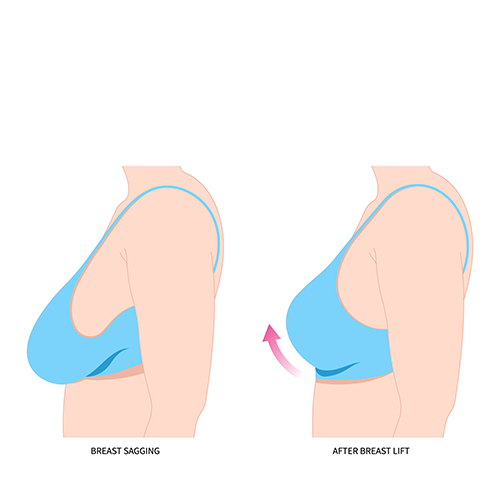
A breast lift, also known as mastopexy, is a surgical procedure performed by a qualified Specialist Plastic Surgeon to raise and reshape breasts that have descended or lost firmness over time. Changes in breast position and contour commonly occur due to ageing, pregnancy, breastfeeding, weight fluctuations, and genetic factors.
Breast lift surgery focuses on improving breast position and shape by removing excess skin and supporting the underlying breast tissue. It does not significantly change breast volume but aims to restore a more elevated and proportionate breast appearance. The nipple and areola may also be repositioned to align with the new breast shape.
This content has been medically reviewed by Dr Khan, MBBS, MRCS (Edin), FRACS (Plast)
Breast lift surgery is a personalised procedure. The technique used depends on factors such as breast size, degree of skin laxity, nipple position, and overall breast shape. During consultation, a Specialist Plastic Surgeon assesses these factors to determine the most appropriate approach for safe lifting, balanced contour, and predictable healing.
A crescent breast lift involves a small incision along the upper edge of the areola. This technique is typically suitable for mild breast descent and may be used when only a subtle lift is required. It offers limited lifting capacity and is not appropriate for more significant ptosis.
Also known as a periareolar lift, this technique uses an incision around the edge of the areola. It allows for modest lifting and reshaping and may also address areolar size. This approach is generally suited to mild to moderate breast descent.
The vertical breast lift uses an incision around the areola with a vertical line extending to the breast crease. This technique allows for greater reshaping and lift, making it suitable for moderate breast descent. It provides improved contour while limiting incision length compared to more extensive approaches.
The anchor, or inverted-T, breast lift involves incisions around the areola, vertically down the breast, and along the breast fold. This technique is typically used for more significant breast descent or excess skin. It allows for substantial reshaping and elevation when required based on clinical assessment.
Candidates should be in good general health and have no unmanaged medical conditions that could increase surgical risk. Maintaining a stable body weight is important, as significant fluctuations can affect breast shape and long-term results. Realistic expectations about surgical outcomes and recovery are also essential.
Suitability for a breast lift is determined through clinical assessment of anatomy, skin quality, and degree of breast descent, rather than age alone.
At West Coast Plastic Surgery, every mastopexy surgery is performed with the utmost care and precision. Here is a general overview of the steps involved in a typical breast lift procedure:

Breast lift surgery is performed under general anaesthesia to ensure comfort throughout the procedure. An experienced anaesthetic team monitors you closely during surgery. Your anaesthetist will review your medical history and discuss anaesthesia considerations before the operation.

Incision placement depends on the breast lift technique required. Incisions may be positioned around the areola, vertically on the breast, along the breast fold or a combination of these. Your surgeon will explain incision options and expected scar placement during consultation.

During surgery, breast tissue is reshaped to create a more elevated and balanced contour. This step supports improved breast position and proportion while maintaining blood supply to the nipple and surrounding tissue.

Excess skin is removed to address laxity and allow the breasts to sit higher on the chest wall. Skin removal is carefully planned to support healing and maintain breast shape over time.

Incisions are closed using layered sutures to reduce tension and support wound healing. Dressings and a supportive garment are applied before recovery, and aftercare instructions are provided to guide healing.
It’s important to remember that each mastopexy procedure is customised to the patient’s individual needs and goals. The exact steps of your procedure may vary slightly. We will ensure you understand your personalised surgical plan before the day of your procedure.
Mr Khan then moved to Perth, Australia in 2007. He was selected for the highly competitive specialist training programme in Plastic, Reconstructive & Aesthetic Surgery in 2014. After the successful completion of his fellowship with the Royal Australasian College of Surgeons in early 2019, he travelled to Brisbane and Newcastle Upon Tyne, England for post-training fellowships in Head & Neck Surgery, Microsurgery, Facial palsy and Sarcoma.
Mr Khan has published in the peer-reviewed Plastic Surgery journal, presented at national and international conferences and has been part of the training faculty in international plastic surgery flap reconstruction courses in the UK.
Qualifications:






Recovery after a breast lift surgery takes time and patience. At West Coast Plastic Surgery, we are committed to supporting you throughout every stage of your recovery.

You will receive detailed aftercare instructions covering wound care, medications, warning signs to watch for, and follow-up appointments. Following these guidelines closely is essential for optimal healing and results.
Some discomfort is normal after surgery and can be effectively managed with prescribed medication. We will also advise you on proper positioning when sitting or lying down to help minimise discomfort.
Proper care of your incisions is crucial to prevent infection and promote healing. This may include cleaning the area, changing dressings, and applying treatments as directed.
Physical activity should be limited during the initial recovery period. Avoid strenuous exercise and heavy lifting, and gradually resume activities based on our team’s guidance.
Every patient’s recovery is unique and depends on individual health and the procedure performed. Our team will closely monitor your progress and remain available to answer any questions or concerns throughout your recovery.
All surgical procedures carry risks. Potential risks and complications may include:

A breast lift, known medically as mastopexy, is surgery that raises and reshapes breasts that have descended. It removes stretched skin, tightens and reshapes the tissue underneath, and repositions the nipple and areola so they sit higher on the breast, with the areola often reduced in diameter at the same time. It is performed under general anaesthesia and usually takes around one and a half to three hours depending on technique. Ptosis, the medical term for breast descent, follows pregnancy and breastfeeding, weight loss, ageing and genetics, all of which stretch the skin and the internal ligaments supporting the breast. A lift changes position and shape rather than volume. At West Coast Plastic Surgery in West Perth, mastopexy is performed by Specialist Plastic Surgeon Dr Qadir Khan (FRACS, MED0001546567).
A breast lift works by removing the excess skin that allows the breast to sag, then reshaping and repositioning the remaining tissue higher on the chest wall. The nipple and areola stay attached to a pedicle, a column of tissue that preserves their blood and nerve supply, and are moved upward to sit at the most projected point of the reshaped breast. Because the skin envelope is tightened around the same volume of tissue, the breast becomes firmer and more projected without becoming larger. Internal sutures or reshaping of the tissue itself may be used to support the result. Surgery takes roughly three to four hours under general anaesthesia, and is often performed as day surgery, though some patients stay one night depending on their general health, social and demographic requirements..
The clinical measure is where the nipple sits relative to the inframammary fold, the crease beneath the breast. If the nipple sits at or below that crease, or points downward, a lift is generally indicated. If it sits above the crease and the breast simply lacks fullness in the upper pole, implants or fat transfer may suit you better. The widely cited pencil test, holding a pencil under the breast to see whether it stays in place, is a rough self-check rather than a clinical grading. Surgeons use the Regnault classification, which grades ptosis from mild to severe, alongside measurements taken from the collarbone to the nipple. Wanting more fullness in a bra is not the same as needing a lift. Dr Khan will assess your grade of ptosis at consultation.
These describe the incision pattern, and the right one depends on how much skin has to be removed. A crescent lift uses a small incision along the upper edge of the areola and achieves only a subtle lift, so it is rarely used on its own. A donut or circumareolar lift, sometimes called a Benelli, encircles the areola, suits mild to moderate descent and can reduce areola size at the same time. A lollipop or vertical lift adds a vertical incision from the areola to the crease and handles moderate descent with better reshaping. An anchor or inverted-T lift adds a horizontal incision along the crease and is used for significant descent or substantial excess skin. Dr Khan selects the pattern from your measurements rather than from preference.
A breast lift does not remove a meaningful amount of breast tissue, so your volume stays essentially the same. Most patients drop no cup sizes at all, although some find they go down about one, because tightening the skin envelope makes the breast sit higher and more compactly, and a bra fitted to the descended shape no longer fits the lifted one. The breast often looks smaller in clothing even where volume is unchanged. If you actively want to be smaller, a breast reduction is the correct operation, and if you want more volume, particularly in the upper pole, a lift alone will not provide it. Dr Khan will explain what a lift can and cannot change for your anatomy.
They solve different problems. A breast lift removes skin and repositions tissue that has descended, improving position and shape without adding volume. Breast augmentation adds volume using an implant or fat transfer but does not lift a breast that has descended, and placing an implant in a ptotic breast without lifting it usually produces a heavier, lower-sitting result rather than a perkier one. The simplest guide is where your nipple sits: if it is at or below the breast crease, you need a lift, with or without added volume. Patients who have lost upper pole fullness after pregnancy or weight loss frequently need both procedures. Dr Khan will tell you which applies to your anatomy rather than which you ask for.
Yes, and most breast lifts are performed without them. A lift on its own is appropriate where you have enough breast tissue and simply want it repositioned, and it avoids implants altogether, along with their long-term monitoring and the possibility of replacement surgery later. Where some upper pole fullness is also wanted, the alternatives to implants are fat transfer to the breast, which uses your own fat harvested by liposuction, and auto-augmentation, where lower breast tissue is repositioned upward to fill the upper pole during the lift itself. Both achieve modest volume rather than a substantial size increase, and a proportion of transferred fat is reabsorbed. Dr Khan will explain which approach suits your tissue and goals.
Yes. A lift with implants, sometimes called an augmentation mastopexy, is a common single-stage operation for patients who have both descent and volume loss, although it is technically more demanding than either procedure alone and carries a higher revision rate, so some surgeons stage it as two operations where ptosis is severe. A breast reduction already includes a lift, because removing tissue and repositioning the nipple raises the breast, so the two are not combined as separate procedures. One point worth knowing before planning: MBS item 45558 cannot be claimed where any prosthesis is inserted, so adding implants to a lift forfeits any Medicare rebate. Dr Khan will advise on staging and sequencing at consultation.
No. Nothing non-surgical lifts a breast that has already descended, because ptosis is caused by stretched skin and stretched internal ligaments, and neither can be tightened from the outside. Breast lift tape and adhesive bras change the appearance while they are worn and do nothing afterwards. Exercise builds the pectoral muscle beneath the breast but cannot lift breast tissue, which contains no muscle of its own. A vampire breast lift is a platelet-rich plasma injection that neither lifts nor adds meaningful volume despite the name, and laser, thread and so-called scarless lifts produce minimal, short-lived change. A well-fitted supportive bra and avoiding large weight fluctuations may slow further descent. Mastopexy remains the only reliable way to reverse it.
Scars follow the incision pattern used. A donut lift leaves a circular scar at the edge of the areola, where it blends with the natural change in skin colour. A lollipop lift adds a vertical line running from the areola down to the crease. An anchor lift adds a horizontal scar along that crease, which is concealed by the breast itself and by bras and swimwear. Scars are typically raised and pink or red for the first few months, then flatten and fade over roughly 12 to 18 months, although they are permanent. Silicone tape or gel, massage once the incisions have fully healed, and strict sun protection all help, because healing scars darken permanently with UV exposure. There is no genuinely scarless breast lift.
Only in limited circumstances, and never where the surgery is cosmetic. The relevant item is MBS 45558, correction of bilateral breast ptosis by mastopexy, which requires that at least two-thirds of the breast tissue, including the nipple, lies below the inframammary fold with the nipple at the lowest part of the breast contour, and that photographic evidence covering anterior, left lateral and right lateral views, with a marker at the level of the fold, is documented in your notes. It is claimable once per lifetime and cannot be claimed where any prosthesis is inserted. An earlier version of the item also required surgery between one and seven years after the most recent pregnancy; that condition no longer appears in the current descriptor. That threshold represents severe descent, and many patients who would benefit from a lift do not meet it.
Private health insurance follows Medicare. If your surgery meets the criteria for an MBS item number, it sits in the “Breast surgery (medically necessary)” clinical category, which is a minimum inclusion on Bronze, Silver and Gold hospital policies but not on Basic. Your fund can then contribute to hospital and theatre fees and pay the balance of the schedule fee for the surgeon and anaesthetist, which is usually worth considerably more than the Medicare rebate itself. You would still need to pay the gap for the surgeon and anesthetist fees. If no item number applies, the lift is classed as cosmetic and no fund will contribute. Standard rules still apply, including a 12-month waiting period for pre-existing conditions, your policy excess and any gap. Confirm cover directly with your fund before booking, and contact our team if you need the item number to quote them.
A good candidate has breast descent, with the nipple sitting at or below the crease beneath the breast, is in good general health at a stable weight, is a non-smoker or willing to stop before and after surgery, and understands what a lift can and cannot change. There is no fixed age requirement, because suitability rests on skin quality, tissue volume and degree of descent rather than years, and patients range widely in age. Timing matters more than age: a future pregnancy will stretch the skin again, and further significant weight loss will leave new laxity, so both are reasons to defer. Skin elasticity affects how well the result holds, and poor elasticity after major weight loss can mean earlier recurrence. Dr Khan will tell you directly if a lift is not the right procedure.
Many women breastfeed successfully after a mastopexy, but it cannot be guaranteed, and rates are somewhat lower than for women who have not had surgery. A lift preserves more of the breast than a reduction does, because little tissue is removed and the nipple stays attached to a pedicle that keeps the milk ducts and nerve supply largely intact, so the anatomy needed for lactation is usually retained. The risk is higher where the areola is substantially reduced or where the technique divides tissue directly beneath the nipple. Since a further pregnancy will also stretch the skin and undo part of the result, most surgeons suggest deferring a lift until you have finished having children. Tell Dr Khan at consultation if you plan to breastfeed.
Some change is common in the early months, ranging from numbness to heightened sensitivity or intermittent shooting sensations as the nerves recover. For most patients sensation returns substantially over six to twelve months, because the nipple remains attached to a pedicle carrying its nerve supply, and the risk of permanent change rises with the extent of the lift. The nipple and areola also change in appearance: the areola is usually reduced in diameter and made round, and it sits higher and further forward on the breast, which is the purpose of repositioning it. Rarely, the blood supply to the nipple is compromised, which can cause partial or complete nipple loss. Dr Khan will explain the risks specific to the technique planned for you.
Most patients describe the first three to five days as tight, sore and heavy rather than sharply painful, and generally find a lift less uncomfortable than a breast reduction or an implant placed beneath the muscle. Discomfort is managed with prescribed pain relief, usually stepped down to simple analgesia within the first week. Swelling, bruising, tightness across the chest and intermittent shooting or burning sensations as the nerves recover are all normal in the early weeks. Sleeping with your upper body elevated and wearing your surgical bra as directed both help. Pain that is worsening rather than improving, or clearly one-sided, should be reported promptly, since it can signal a haematoma or infection. You are given written aftercare instructions and a direct contact for concerns.
Most patients take one to two weeks off desk-based work and three to four weeks off physical or standing work. The first three to five days are the most uncomfortable, your first post-operative review falls within the first week, and normal daily activity returns over the first two weeks. Heavy lifting, meaning anything above roughly two to five kilograms, and reaching overhead wait until around four to six weeks, so a toddler and a full shopping bag are both off limits early on. A surgical support bra is worn day and night for approximately six weeks. Swelling settles substantially by six weeks, the breasts drop and settle into their final shape over three to six months, and scars mature for 12 to 18 months.
Sleep on your back with your upper body elevated on pillows or a wedge for the first two to four weeks, since elevation reduces swelling and keeps pressure off the healing breasts. Side sleeping generally resumes at around four to six weeks and stomach sleeping later again, often six to eight weeks. The post-surgical support bra is worn continuously, including overnight, for roughly the first six weeks. Most patients then move into a soft, wire-free bra, and underwire is usually delayed until around three months, because the wire sits directly over the incision in the breast crease. Wait until the shape has settled, at around six months, before investing in professionally fitted bras. Dr Khan’s instructions for your surgery take precedence.
Exercise returns in stages. Gentle walking is encouraged from day one or two to support circulation. Longer walks and light lower-body work are usually reasonable from weeks two to three, and low-impact cardio such as a stationary bike is reintroduced from around week four. Running and other high-impact activity waits until roughly six weeks and requires a well-fitted high-support sports bra, because bouncing places tension directly on the healing incisions and on the tissue holding the lift. Chest and upper-body work, including push-ups, chest press and overhead lifting, is the last category to return, generally at six to eight weeks. Swimming, spas and baths wait until the incisions are fully sealed. Dr Khan will confirm the timeline for your surgery.
The results are long lasting but not permanent, because surgery cannot stop the processes that caused the descent in the first place. Many patients retain a clearly improved breast position for ten years or more, with the greatest change occurring in the first year as the tissue settles. What shortens that is predictable: a further pregnancy, significant weight gain or loss, and poor skin elasticity, particularly after major weight loss. Larger breasts also descend faster than smaller ones, because their weight works against the repair. Maintaining a stable weight, wearing a well-fitted supportive bra and not smoking all help protect the result. Some patients consider revision surgery years later. The scars continue to flatten and fade for 12 to 18 months regardless.
with our patient coordinator