
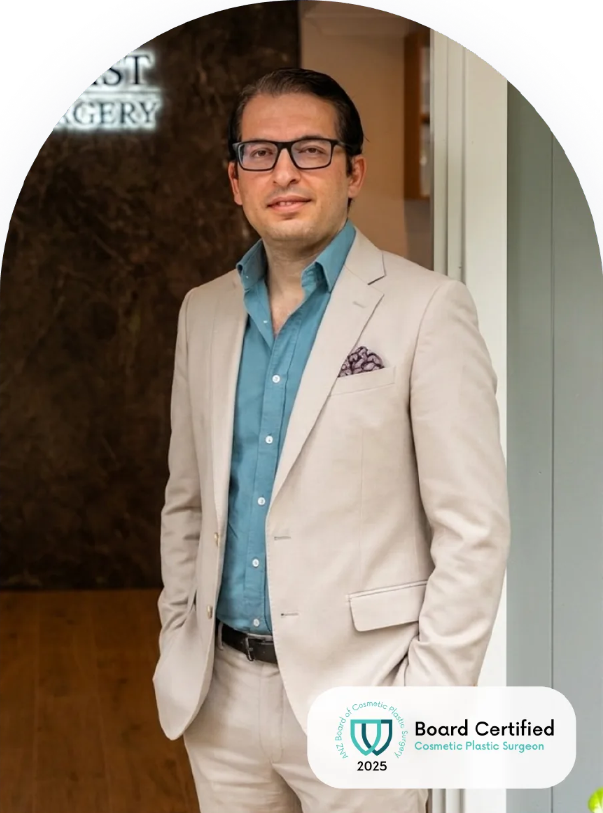
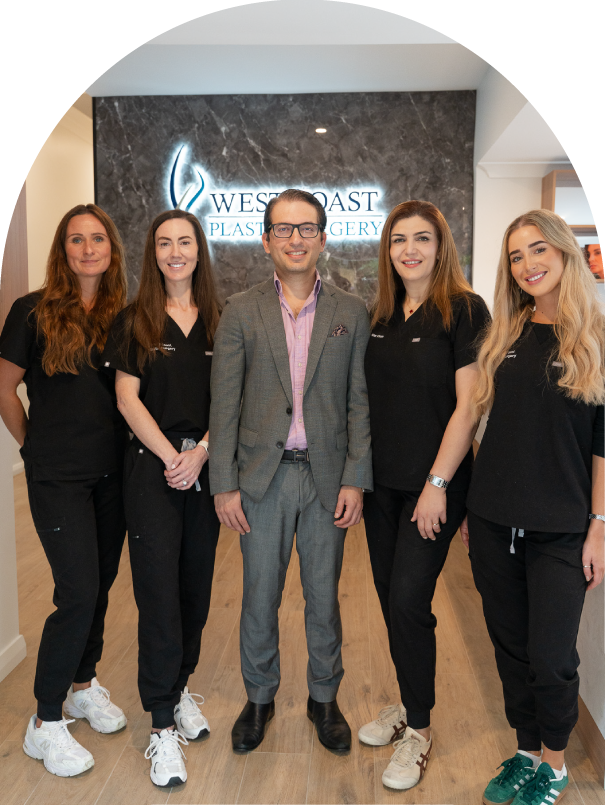
Led by Specialist Plastic Surgeon Dr Qadir Khan (FRACS)
Fat transfer to breast surgery, also known as autologous fat grafting to the breast or a fat transfer breast augmentation, is a procedure performed by a Specialist Plastic Surgeon that uses a person’s own fat to increase breast volume and improve breast contour. Rather than relying on breast implants alone, fat is carefully removed from areas such as the abdomen, flanks, or thighs using liposuction, processed, and then transferred into the breast tissue. Depending on the expected outcomes the procedure can be done on its own or in adjunction with implants for a more natural result.
Fat transfer to breast surgery focuses on achieving a subtle, natural-looking change in breast volume and shape. It is often considered by people seeking modest enhancement, correction of asymmetry, or refinement following weight changes, pregnancy, or ageing. The procedure does not aim to significantly increase breast size and is limited by the amount of fat available and how much transferred fat survives long-term.
This content has been medically reviewed by Dr Khan, MBBS, MRCS (Edin), FRACS (Plast)
Fat transfer to breast surgery offers a range of potential benefits for individuals seeking subtle breast enhancement using their own tissue. The procedure focuses on modest volume increase and contour refinement, with outcomes shaped by individual anatomy and clinical planning.

One of the primary benefits of fat transfer to breast surgery is the use of the patient’s own fat, removing the need for breast implants. This may appeal to those who prefer to avoid foreign materials while achieving a natural-looking breast contour.
Transferred fat can provide a softer breast contour with a smooth, gradual transition in shape. This approach is often suited to individuals seeking subtle enhancement rather than a significant change in breast size.
Fat is harvested from areas such as the abdomen, flanks, or thighs using liposuction. This can result in improved contour in these donor areas, supporting overall body proportion when planned carefully.
Fat grafting allows precise placement of small volumes of fat, which may help address mild breast asymmetry or contour irregularities. This level of control can be useful for refining breast shape.
Fat transfer to breast surgery can be tailored to individual goals and anatomy. However, it is important to consider the fat transfer to breast pros and cons, including limitations on volume increase and the possibility that more than one procedure may be required to achieve the desired outcome.
An ideal candidate for fat transfer to breast surgery is generally in good overall health and seeking a modest increase in breast volume or improvement in breast shape rather than a significant size change. Candidates need to have sufficient donor fat available for transfer, commonly from the abdomen, hips, flanks, or thighs.
Stable body weight is important, as weight fluctuations can affect both the donor areas and the long-term appearance of the breasts. Candidates should be non-smokers or willing to stop smoking, as smoking can affect fat survival and healing.
Fat transfer to breast surgery may be suitable for individuals looking to correct mild asymmetry, restore volume following pregnancy or weight loss, or refine breast contour. Suitability is assessed through clinical examination, discussion of goals, and more during consultation.
At West Coast Plastic Surgery, every fat transfer to breast procedure is performed with the utmost care and precision. Here is a general overview of the steps involved in a typical fat transfer breast augmentation:

Fat transfer to breast surgery is typically performed under general anaesthesia to ensure comfort throughout the procedure. An experienced anaesthetic team monitors you closely. Your anaesthetist will review your medical history and discuss anaesthesia considerations prior to surgery.

Fat is harvested using liposuction from selected donor areas such as the abdomen, thighs, or flanks. Small incisions are used, and care is taken to remove fat gently to preserve fat cell viability for transfer to the breasts.

Once harvested, the fat is processed to remove excess fluid, blood, and damaged cells. This step helps prepare the fat for reinjection and supports improved fat survival once transferred into the breast tissue.

The prepared fat is injected into the breast tissue in small amounts and layered carefully. This technique supports blood supply to the transferred fat and helps achieve even distribution, contour refinement, and predictable healing.

Small incisions at the donor and injection sites are closed with sutures or adhesive strips. Dressings and compression garments are applied to the donor areas. Post-operative care instructions are provided before recovery.
It’s important to remember that each breast fat transfer procedure is customised to the patient’s individual needs and goals. The exact steps of your procedure may vary slightly. We will ensure you understand your personalised surgical plan before the day of your procedure.
Mr Khan then moved to Perth, Australia in 2007. He was selected for the highly competitive specialist training programme in Plastic, Reconstructive & Aesthetic Surgery in 2014. After the successful completion of his fellowship with the Royal Australasian College of Surgeons in early 2019, he travelled to Brisbane and Newcastle Upon Tyne, England for post-training fellowships in Head & Neck Surgery, Microsurgery, Facial palsy and Sarcoma.
Mr Khan has published in the peer-reviewed Plastic Surgery journal, presented at national and international conferences and has been part of the training faculty in international plastic surgery flap reconstruction courses in the UK.
Qualifications:




Recovery from fat transfer to breast takes time and patience. At West Coast Plastic Surgery, we are committed to supporting you through every stage of your recovery.

You will receive detailed aftercare instructions covering wound care, medications, warning signs to watch for, and follow-up appointments. Following these guidelines closely is essential for optimal healing and results.
Some discomfort is normal after surgery and can be effectively managed with prescribed medication. We will also advise you on proper positioning when sitting or lying down to help minimise discomfort.
Proper care of your incisions is crucial to prevent infection and promote healing. This may include cleaning the area, changing dressings, and applying treatments as directed.
Physical activity should be limited during the initial recovery period. Avoid strenuous exercise and heavy lifting, and gradually resume activities based on our team’s guidance.
Every patient’s recovery is unique and depends on individual health and the procedure performed. Our team will closely monitor your progress and remain available to answer any questions or concerns throughout your recovery.
All surgical procedures carry risks. Potential risks and complications of fat transfer to breast surgery may include:

Fat transfer pros include avoiding implants, achieving natural contour, and combining breast enhancement with liposuction. Cons include limited volume increase, partial fat reabsorption, and the possibility of needing more than one procedure. These factors vary between individuals. Book a consultation for a clinical assessment.
Fat transfer to breast cost varies depending on the extent of liposuction, number of donor areas, surgical complexity, and hospital and anaesthesia fees. As the procedure is highly individualised, a detailed cost estimate is provided after consultation. During your appointment, costs are explained clearly so you can make an informed decision. Contact our Perth clinic to arrange a consultation.
Not all transferred fat survives permanently. A portion is naturally reabsorbed by the body over time, which is considered during surgical planning. Final breast volume becomes clearer over several months as healing progresses. Your Board Certified Plastic Surgeon will discuss realistic expectations during consultation. To learn how this may affect your results, book an appointment at our Perth clinic.
Yes. Fat transfer to breast before and after photos are available to view during your consultation with a Specialist Plastic Surgeon, where clinically appropriate. These images help explain realistic outcomes and variability between individuals. Viewing images in person allows context and explanation from your surgeon. To review examples and discuss expected results, book your consultation at our Perth clinic.
Results from fat transfer to breast surgery can be long lasting once the transferred fat establishes its blood supply. However, some fat reabsorption is expected in the early months. Long-term outcomes are influenced by weight stability, lifestyle factors, and individual healing. Your surgeon will explain realistic expectations during consultation. Book an appointment at our Perth clinic to discuss long-term results.
with our patient coordinator